DFWerke

Testing Materials. Ensuring Quality.

understanding the atomic

“research is to see what everybody else has seen, and think what nobody has thought”

-Albert Szent-Gyorgyi
Nobel Prize in Physiology/Medicine in 1937

DFWerke

Applications of Thermogravimetric Analysis (TGA)

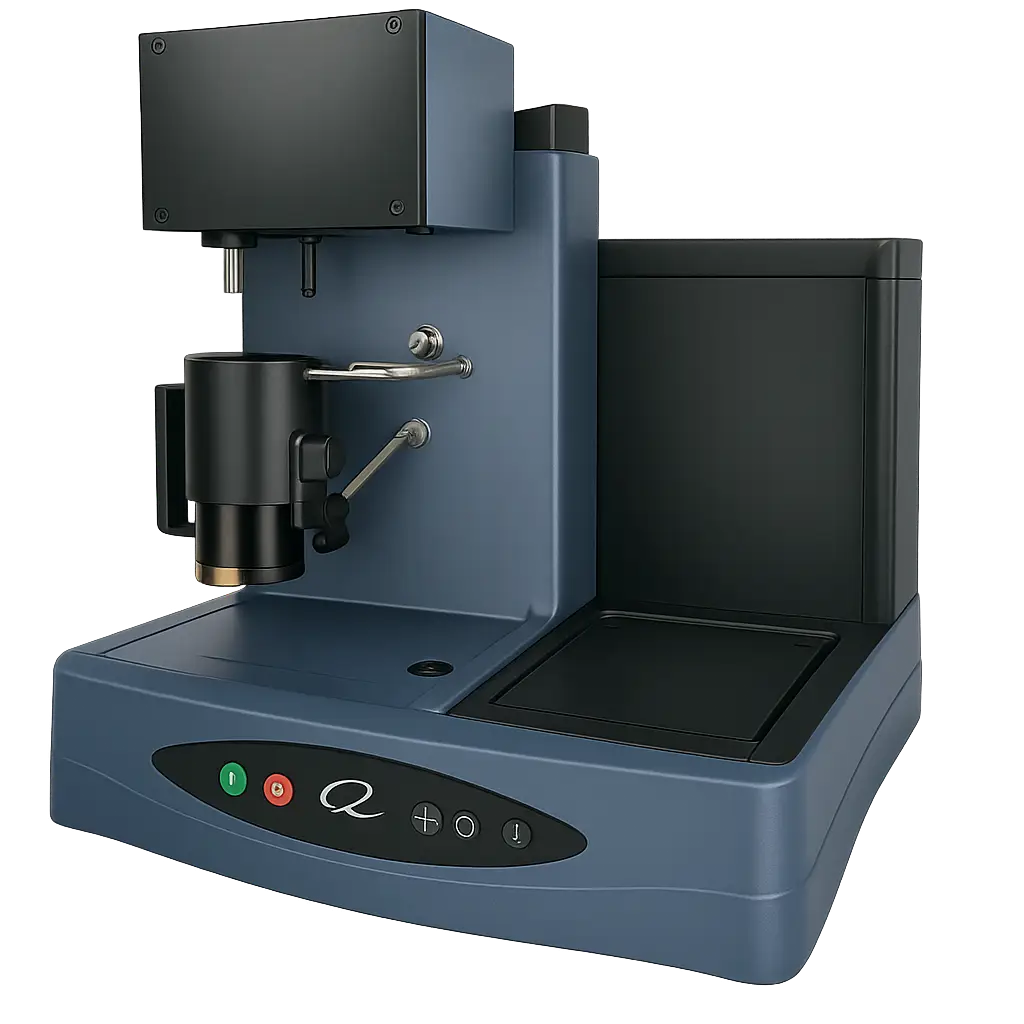
Thermogravimetric Analysis (TGA) is essential for evaluating mass changes in materials under controlled temperature conditions. At DFWerke, TGA is applied to a wide variety of materials—polymers, composites, films, and filled systems—to deliver:

  • Thermal Stability: Determine decomposition temperatures and degradation profiles to predict service lifetimes.

  • Composition Analysis: Quantify polymer content, fillers, additives, residual solvents, and moisture.

  • Oxidative Stability: Assess weight loss under air or inert atmospheres to identify material behavior in real-world environments.

  • Process Control: Monitor changes in material formulation or thermal history affecting performance or recyclability.

  • Residue Identification: Analyze ash content or residual mass for inorganic fillers and reinforcements.

  • Material Selection: Support screening of materials based on volatility, degradation temperature, and stability during manufacturing.

TGA enables industries such as energy storage, construction, electronics, and aerospace to make informed decisions about thermal processing, formulation durability, and material purity.

Thermogravimetric Analysis (TGA): Measure Weight Loss, Decomposition Temperatures, Moisture Content, and Thermal Stability to Detect Material Composition, Identify Residual Solvents, Quantify Fillers, and Assess Oxidative Stability Across Various Temperature Ranges.

Case Study: Thermogravimetric Analysis (TGA) for Composition Profiling of Polymer Blends

DFWerke was routinely contracted by a manufacturer to determine the composition of proprietary and third-party polymer blends used in various product lines. Using Thermogravimetric Analysis (TGA), we analyzed thermal degradation profiles under controlled temperature ramps in both inert and oxidative environments. By comparing the mass loss steps and derivative weight loss curves to in-house standards, we were able to deconvolute multi-phase materials and estimate the relative content of polymeric components, fillers, and additives. This approach enabled the client to validate supplier formulations, detect deviations from known standards, and ensure product consistency across batches.
Case Study: Coupled TGA-MS Analysis for Outgassing Characterization in Polymer Materials

A client approached DFWerke to investigate outgassing behavior in a polymer system used in high-vacuum environments. Using Thermogravimetric Analysis (TGA) coupled with Mass Spectrometry (MS), we monitored real-time mass loss and simultaneously identified the molecular species evolving during decomposition. This allowed us to correlate specific weight-loss events with the release of low molecular weight volatiles, plasticizers, and degradation products. The analysis provided detailed insights into the thermal stability and purity of the polymer, enabling the client to refine their formulation and reduce outgassing-related contamination in sensitive applications.

DFWerke is a trusted provider of materials testing and consulting services for medical technology and general polymer processing companies.

Located in Clemson, South Carolina, our small laboratory is staffed by highly trained scientists who offer personalized thermal analysis for both routine and complex material issues.