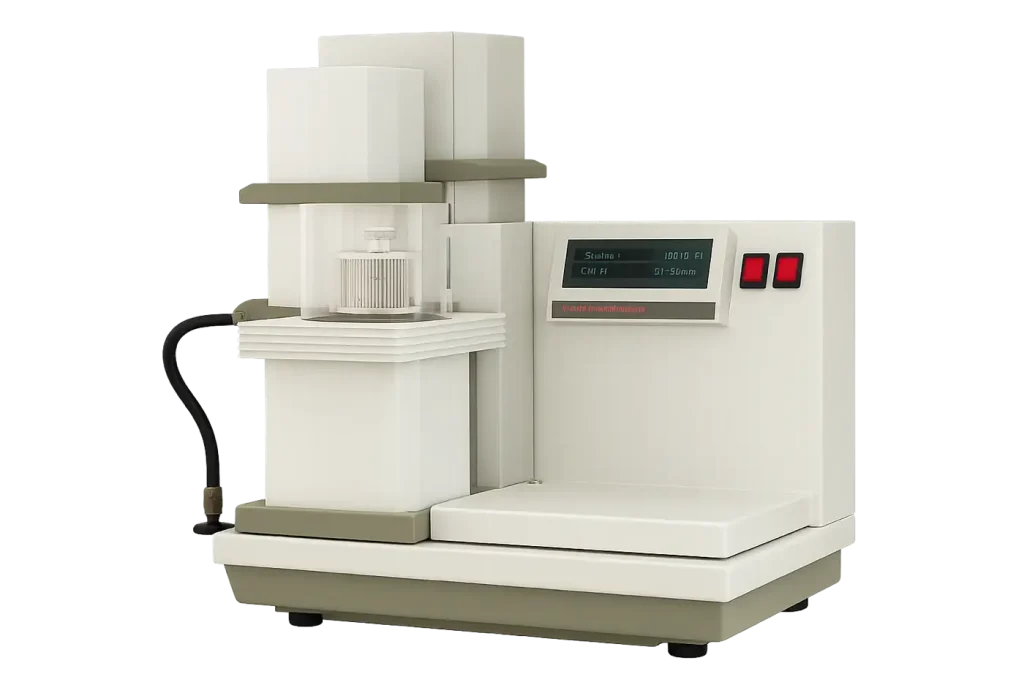
Dynamic Mechanical Analysis (DMA) provides essential data on how materials respond to stress, strain, and temperature variations. DFWerke leverages advanced DMA techniques using Parallel Plate, Tension, Compression, Cantilever, and Three-Point Bending configurations to assess:
Material Characterization: Quantify stiffness, elasticity, and viscoelastic behavior—understanding how materials store and dissipate energy in polymers, composites, and gels.
Thermal Transitions: Detect glass transition temperature (Tg), softening points, and phase changes crucial for polymers, battery separators, and medical device components.
Mechanical Memory and Recovery: Assess stress relaxation, creep behavior, and mechanical memory to ensure stability in adhesives, elastomers, and biomedical materials.
Failure Analysis: Identify weak points in structural materials through fatigue testing, damping analysis, and fracture toughness assessment.
Product Development: Optimize formulations for targeted mechanical properties, from flexible coatings and damping layers to rigid structural components.
Process Optimization: Validate processing parameters by analyzing material response to frequency and temperature changes, simulating real-world mechanical stress.
Our comprehensive DMA capabilities support industries ranging from automotive and aerospace to medical devices and electronics, delivering precise, actionable insights to enhance material performance and reliability.