DFWerke

Testing Materials. Ensuring Quality.

understanding the atomic

“research is to see what everybody else has seen, and think what nobody has thought”

-Albert Szent-Gyorgyi
Nobel Prize in Physiology/Medicine in 1937

DFWerke

Applications of Rheological Analysis

Rheological analysis provides critical insights into material behavior across diverse applications, from product development to quality control. DFWerke leverages advanced rheological techniques using Cone-and-Plate, Parallel Plate, Couette, and Torsion Bar configurations to assess:

  • Material Characterization: Viscosity, viscoelasticity, and shear-thinning behavior in liquids, gels, and polymer melts.
  • Process Optimization: Flow behavior under shear and thermal conditions, aiding extrusion, molding, and coating processes.
  • Thermal Stability: Identifying thermal softening, glass transition, and melt flow properties across temperature ranges.
  • Structural Analysis: Mechanical memory, stress relaxation, and gel strength in solids and semi-solids.
  • Failure Analysis: Detecting flow-induced defects, creep failure, and phase separation in complex formulations.
  • Product Development: Optimizing formulations for adhesives, coatings, composites, and elastomers.

Our comprehensive capabilities support industries from medical devices to automotive components, ensuring accurate, actionable data for informed decision-making.

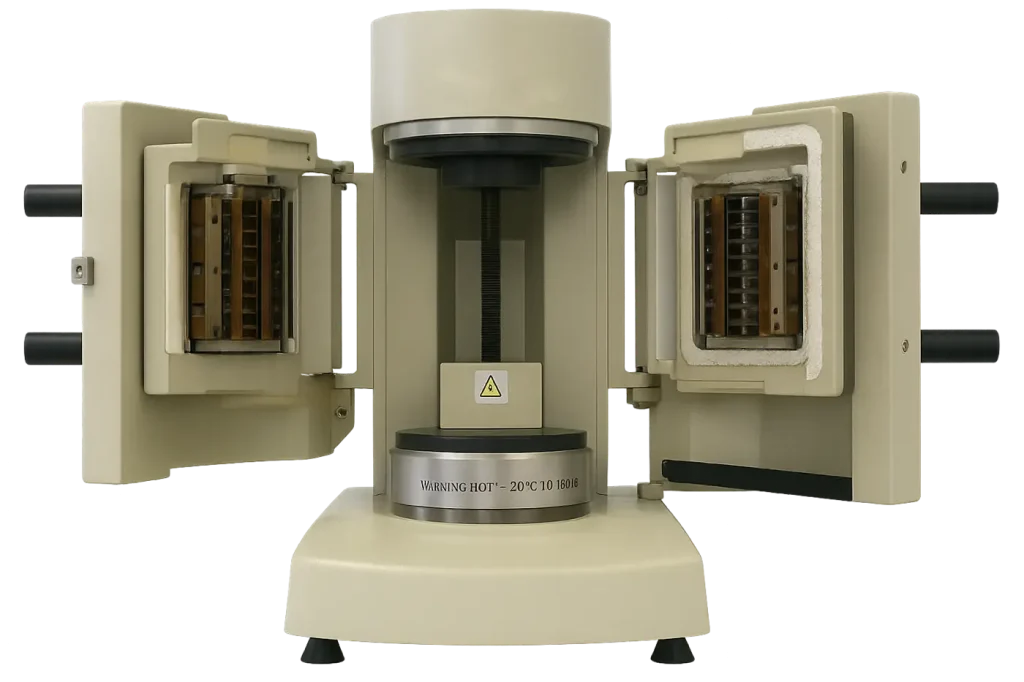
Rheometry (Cone-and-Plate / Parallel-Plate): Characterize viscosity, viscoelasticity, torsional modulus, and tan δ under controlled shear and oscillatory stress to evaluate processability, structural integrity, and performance of polymers, composites, and coatings.

Case Study: Rheological Evaluation of Cable Flooding Gels in Fiber Optics

A fiber optics manufacturer engaged DFWerke to evaluate the rheological behavior of gel materials used to flood and stabilize fibers within cable assemblies. Using oscillatory and steady shear testing in Cone-and-Plate and Parallel Plate configurations, we assessed viscosity profiles, viscoelastic response, and mechanical memory under conditions mimicking cable winding and installation. The study quantified shear thinning behavior, stress recovery, and time-dependent relaxation characteristics. Results highlighted that certain formulations exhibited incomplete recovery after shear, leading to deformation and flow within the cable core. Based on our findings, the client reformulated the gel to enhance elastic recovery and dimensional stability, improving long-term product reliability.
Case Study: Viscoelastic Analysis of Hydrogels for Drug Delivery

A medical device company hired DFWerke to assess the viscoelastic properties of a hydrogel formulation to address inconsistencies in drug release rates. Using oscillatory testing with Parallel Plate and Cone-and-Plate configurations, we quantified storage and loss moduli, analyzed stress relaxation, and assessed thermal transitions. The analysis revealed that formulations with higher mechanical strength exhibited more controlled drug release, leading to recommendations for optimizing crosslinking density to enhance performance.

DFWerke is a trusted provider of materials testing and consulting services for medical technology and general polymer processing companies.

Located in Clemson, South Carolina, our small laboratory is staffed by highly trained scientists who offer personalized thermal analysis for both routine and complex material issues.